AI Companion to Manage Public Speaking Anxiety
Public speaking anxiety can be trained away. Here's how a vocal AI companion helps you rehearse, get feedback, and calm your nerves before the big moment.
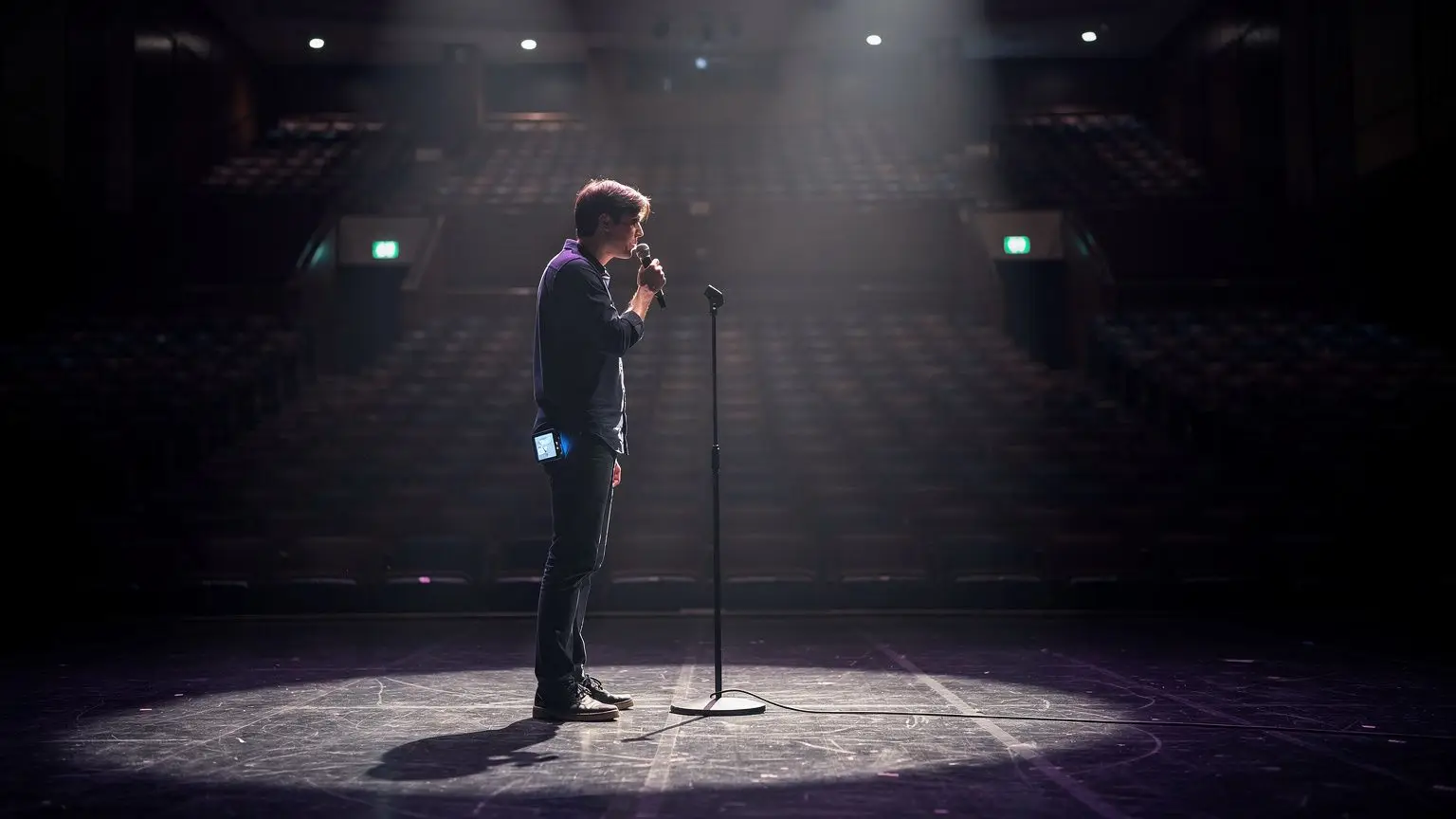
Racing heartbeat, sweaty palms, your words disappearing just before you step on stage or open a video conference: public speaking anxiety affects almost everyone, from beginners to seasoned speakers. The good news is that this anxiety can be managed and reduced through practice. A vocal AI companion can serve as a rehearsal partner available anytime, capable of listening, reacting, and reassuring you before the moment arrives.
Why Anxiety Often Strikes When Preparation Falls Short
Anxiety isn’t a character flaw—it’s a physiological response to feeling judged. It intensifies when three elements are missing: mastery of your content, familiarity with speaking aloud, and confidence in your own voice. Rehearsing in your head isn’t enough: your brain reacts differently when words actually leave your mouth, with rhythm, breathing, and hesitations.
That’s where out-loud practice changes everything. The problem is that you rarely have an audience available the evening before an important presentation. An AI companion fills this gap perfectly.
What a Vocal AI Companion Offers in Practice
A vocal AI companion with voice and avatar allows you to simulate active listening without the social judgment that comes with rehearsing in front of someone you know. Three common uses stand out:
- Simulate speaking situations: deliver your speech aloud to an interlocutor who responds, as if someone were actually there with you.
- Receive kind feedback: on clarity, word repetitions, pacing—without sarcasm or impatience.
- Decompress right before the event: a brief conversation to bring stress levels down when anxiety spikes.
The vocal dimension matters more than you might think. A calm voice that leaves silences and asks questions at the right moments helps you feel genuinely heard. This topic is detailed in this article on choosing an AI companion’s voice and its real impact.
An Avatar to Recreate Presence
Speaking into the void, even to a text-based AI, doesn’t have the same effect as speaking to a face that reacts. A 3D avatar that nods, smiles, or slightly furrows its brow recreates a form of social presence, enough to trigger the same stress mechanisms—and therefore to practice managing them. This mechanism is explained in detail in this article on the 3D avatar AI companion and the conversation it enables.
A Concrete Training Scenario the Day Before a Presentation
Let’s take the case of Anna, who needs to present a project to her team tomorrow morning. Here’s how a session with a vocal companion might unfold:
- Set the stage. She explains to the AI the context: presentation length, audience type, points that worry her (the introduction, a tricky question about budget).
- First read-aloud. She reads her outline or improvises her speech, addressing the avatar directly as if it were her team.
- Targeted feedback. The AI points out what lacks clarity, flags a rushed passage, suggests a simpler rewording for the opening line—without dramatizing or using anxiety-inducing scores.
- Second pass. Anna goes through her speech again, incorporating adjustments, this time working on tone and pauses.
- Question simulation. She asks the AI to play a skeptical colleague who raises questions about the budget, so she can practice answering without getting thrown off.
- Return to calm. Once rehearsal is done, she spends a few minutes talking about what really worries her—fear of silence, others’ judgment—and receives thoughtful responses that don’t minimize her feelings.
The next morning, before entering the room, a final two-minute vocal exchange is often enough to bring tension down, much like calling a friend right before an important appointment.
Try noov.ai for free to test this type of vocal rehearsal before your next public speaking moment, with an avatar that listens and responds in real time.
Limitations to Keep in Mind
An AI companion is not a certified public speaking coach or therapist. It doesn’t replace real feedback on posture, eye contact, or body language, which remain essential in oral practice. It’s also worth noting that these tools sometimes handle personal conversations; it’s better to know where these confidences go and how they’re used before fully trusting them.
If anxiety goes well beyond a single presentation and comes with broader generalized anxiety, an AI companion can offer initial support, but it has limits. This article on trusting a chatbot for mental health matters details where its role ends and when to see a professional.
Other Situations Where Vocal Simulation Helps
The principle of rehearsing aloud with an AI before a stressful moment isn’t limited to public speeches. It also works for other demanding oral situations, like preparing to negotiate your salary by simulating the conversation with the AI or practicing with prompts to prepare for a job interview. The mechanism is the same: say the words aloud, hear a reaction, adjust, repeat.
The Key Takeaway
Anxiety decreases with practice, not willpower alone. A vocal AI companion offers a space to rehearse without judgment, get concrete feedback, and ease tension before the moment arrives. It won’t replace the experience of speaking to a real audience, but it’s an accessible training step, available even at the last minute—the night before a presentation or just before you walk into the room.
Try it with noov.ai

Frequently asked questions
Can an AI companion really help reduce public speaking anxiety?
It helps mainly through repetition: saying your speech aloud to an active listener gets your body and mind accustomed to the exercise, which reduces the burden of novelty on the day itself. It doesn't eliminate anxiety but makes it more manageable.
Should I prefer a vocal AI companion to a simple text chatbot for practice?
Yes, if possible, because speaking aloud engages breathing, pacing, and tone—elements that written conversation doesn't develop. Voice and avatar recreate a form of presence closer to the actual situation.
When should I do this AI rehearsal: the day before or just before?
Both are useful but for different goals. The day before helps you refine content and speech clarity, while a short session just before the event is mainly for calming immediate tension.
Can the AI companion simulate difficult questions from the audience?
Yes, you can ask it to play a specific role, like a skeptical audience member or a demanding manager, to practice answering unexpected questions without being thrown off on presentation day.
Does this type of practice work for broader social anxiety?
It can provide initial support for specific situations, but an AI companion isn't a mental health professional. For persistent, generalized anxiety, working with a therapist remains recommended.