AI Companion Voice: Why This Choice Changes Everything
Tone, rhythm, and accent of an AI voice weigh as much as words in the trust and empathy you feel.
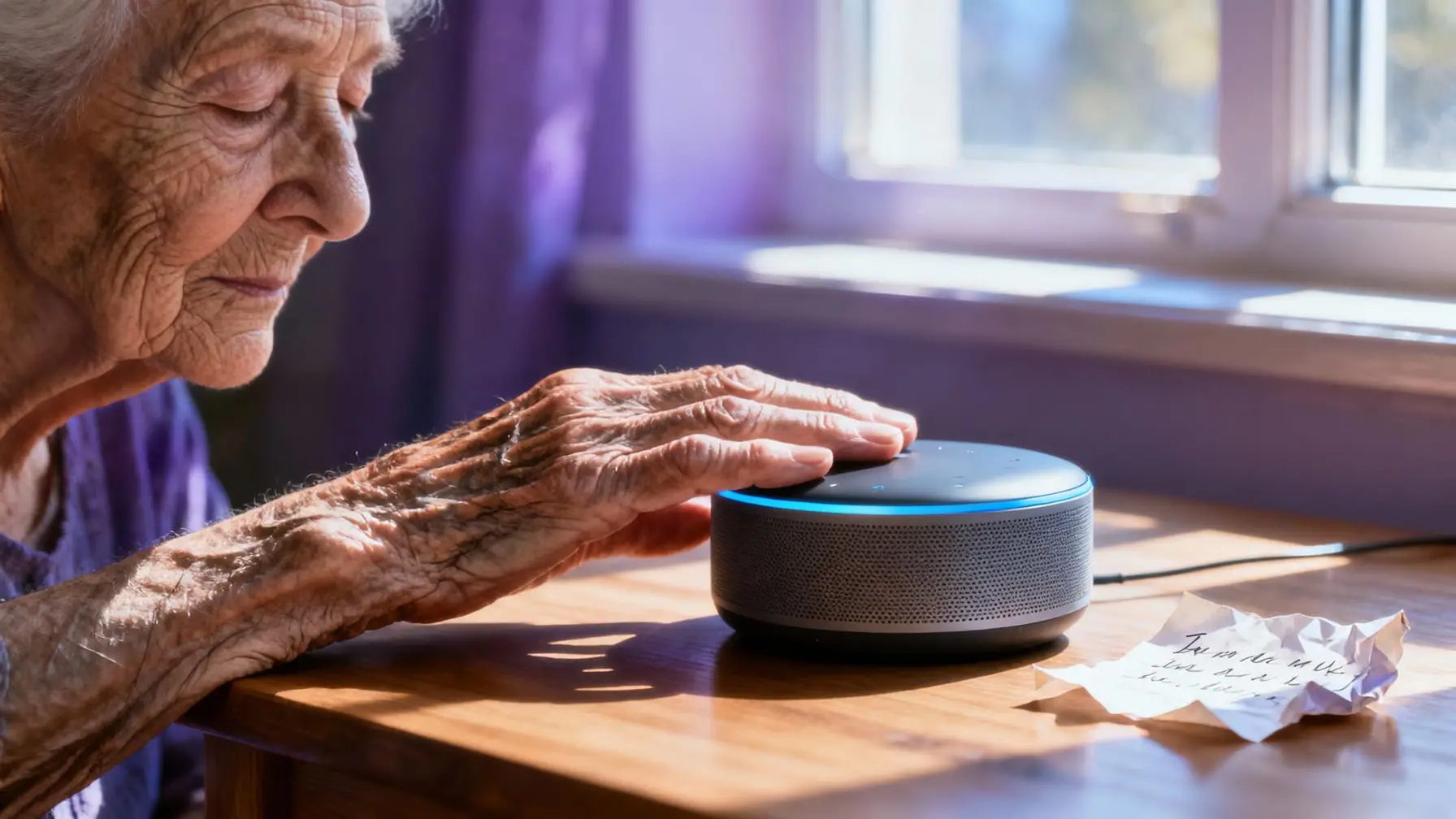
When we talk about an AI companion, we think first about what it says. Yet how it says it matters just as much, sometimes more. The same sentence, spoken in a monotone voice or in a warm, well-paced voice, doesn’t produce the same effect on the listener. Understanding why voice changes the experience so much helps you choose your AI companion better, and understand what’s really at stake in these conversations.
Why Voice Influences Trust in AI So Much
Empathy Happens in Tone, Not Just Words
In human conversation, much of what we perceive as empathy doesn’t come through verbal content. Tone, micro-variations in intonation, pauses—all of this signals to our brain that the other person is truly listening. An AI that reproduces these signals, even synthetically, activates the same perception mechanisms. Conversely, a flat voice that delivers kind statements in a neutral tone creates a gap: the message says one thing, the voice says another. This mismatch is immediately perceived, even if you can’t explain why.
The Human Brain Links Voice to Intention
Our brains evolved to read intention behind a voice long before understanding word meaning. A baby reacts to tone before grasping language. This ability remains active in adulthood, even facing an artificial voice. That’s why a poorly calibrated AI companion voice can feel cold or artificial, even if the generated text is perfectly suited and relevant.
Criteria for a Good Conversational Voice
Not all synthetic voices are created equal. Several concrete criteria make the difference between a voice that puts you at ease and one that creates distance.
Pace: Neither Too Slow nor Too Fast
A pace that’s too quick feels like recitation, as if the AI wants to get it over with. A pace that’s too slow, conversely, can seem hesitant or artificial. The right pace mirrors natural conversation, with slight variations based on content: more measured on sensitive topics, more brisk on lighter responses.
Intonation and Silence
Well-placed silences, before an important response for instance, reinforce the impression of listening. Intonation that rises slightly at the end of a question, that falls on a reassuring statement, reproduces the codes we unconsciously link to genuine attention toward the listener.
Accent and Naturalness
A heavily marked accent, or conversely overly smooth diction without texture, can create distance. The most convincing voices today integrate small natural imperfections: a breath, slight tone variation between sentences. This is what sets them apart from dated voice synthesis, immediately identifiable as robotic.
Coherence Between Voice and Displayed Personality
When an AI companion presents itself with a 3D avatar and real conversation, the voice must match the appearance and personality shown. A deep, measured voice on an avatar presented as cheerful creates a dissonance that breaks immersion. This overall coherence—between visuals, text, and voice—is what makes the experience credible over time.
Voice’s Effect on Emotional Engagement
Voice does more than improve listening comfort; it changes the nature of the exchange itself. Many people who use an AI to talk to when they feel lonely at night report that a voice call changes everything compared to text exchange alone. Hearing a voice, even artificial, activates a form of presence that text alone doesn’t provide. This is an important point to understand before using this type of tool: emotional engagement isn’t just about content; it also depends on the sonic form of the exchange.
This effect explains why the most-used AI companions invest as much in voice quality as in the quality of generated responses. A well-crafted voice can make an ordinary conversation feel more reassuring, while a poor voice can make otherwise relevant content seem suspect.
AI Voice and Awareness: What to Keep in Mind
This power of voice also deserves a clear-eyed perspective. A warm, convincing voice can foster quick trust, sometimes faster than the relationship with a software tool justifies. This is especially true for younger audiences: the risks and benefits of an AI companion for teens deserve to be known by parents, voice being precisely one of the factors that strengthens attachment.
It’s also useful to remember that these voice exchanges, often personal in nature, involve sensitive data. Understanding where confidences shared with an AI companion go allows you to use these tools knowingly, without giving up their comfort.
How to Test and Choose Your AI Companion Voice
The best way to judge a voice is to try it yourself, in real conversation, rather than on a few-second promotional clip. Your impression often changes after several exchanges, once you’ve observed how the voice responds to different tones, different emotions, different dialogue rhythms.
If you want to compare several 3D avatar voices and see which one best matches what you’re looking for, you can try noov.ai for free and test these differences directly under real conditions, in a voice call or text exchange.
In Summary
An AI companion’s voice isn’t a minor technical detail. It shapes the perception of empathy, the trust given, and the intensity of emotional engagement felt throughout exchanges. Pace, intonation, accent, coherence with displayed personality: each element matters. Before choosing an AI companion, it’s worth listening, not just reading what it offers.
Frequently asked questions
Why does voice matter so much in an AI companion?
The human brain reads intention through tone and rhythm before understanding word meaning. A well-calibrated voice strengthens the perception of listening and trust, independent of text content.
What are the criteria for a good conversational AI voice?
A natural pace, well-placed silences, varied intonation, and coherence with the AI's displayed personality. These elements combined avoid an impression of robotic or mismatched voice.
Can a synthetic voice truly create empathy?
It can activate the same perceptual signals as a kind human voice, without actually feeling emotion. It's the reproduction of attention-related vocal codes that produces this effect for the user.
Should I be wary of attachment created by an AI voice?
A warm voice can build trust faster than the relationship with software justifies. It's useful to keep this distance in mind, especially for younger audiences.