AI Companion and Guided Meditation: A Wellness Routine
Can a voice AI companion guide your breathing or a short meditation? Here's what it brings to the table, and what it doesn't replace.
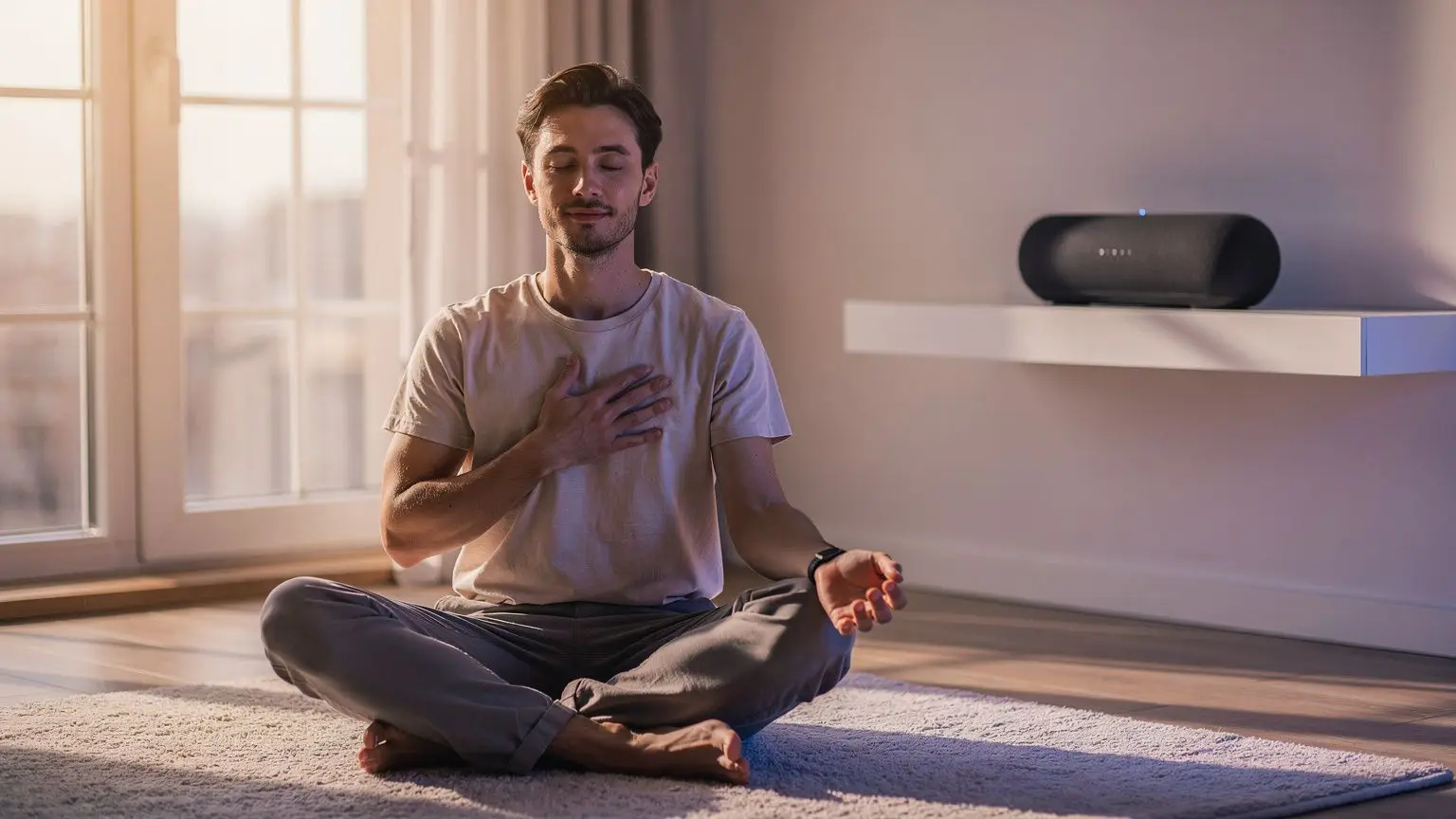
You’re looking for a simple way to carve out a few minutes of calm into your day, and wondering whether an AI companion can really help you meditate? The answer comes with a nuance: a voice companion won’t replace a dedicated meditation app, but it can become an accessible entry point, available anytime, to anchor your breathing or close out a hectic day.
Why pair an AI companion with guided meditation
Traditional meditation apps (Calm, Petit Bambou, Insight Timer) offer structured programs designed by experts, with real pedagogical progression. They remain the gold standard for learning to meditate seriously.
A voice AI companion plays a different role: it’s there when you can’t be bothered to open a new app, choose a program, or hunt for the right session. You speak to it, it responds, and your breathing begins. That friction-free quality is what makes the difference for a short, consistent practice.
A complement, not a replacement
Let’s be honest about this: an AI companion doesn’t have the depth of a meditation program built over several weeks. It won’t replace a teacher, therapy, or a deep practice. What it does fill is a specific gap: those micro-moments throughout your day when launching a dedicated app feels like overkill — between meetings, before bed, stepping out of the subway.
What a voice AI companion can actually do
Guide a short breathing session
A heart rate coherence or 4-7-8 breathing session doesn’t require complex content: a rhythm, a guiding voice, a countdown. That’s exactly what a voice companion can deliver in under three minutes, without a rigid script, adapting to your pace if you ask it to.
Offer a short guided meditation
For a 5 to 10-minute break, your companion can walk you through a simple meditation: body anchoring, breath awareness, releasing tension. What sets this apart from a fixed recording is that you can interact: ask it to slow down, clarify an instruction, or just chat briefly before or after the session.
Create an end-of-day transition
Many people lack a decompression ritual between work and sleep. A short voice exchange with an AI companion — a few minutes to name what weighed on your day, followed by guided breathing — can serve that airlock function, without needing a pre-planned routine.
Voice and personalization: two concrete differentiators
Why voice changes the experience
Reading meditation instructions on a screen versus hearing them spoken aloud create different effects. Voice carries rhythm, intonation, presence. This is why the choice of an AI companion’s voice changes the experience so much: a robotic voice breaks immersion, while a calm, warm voice genuinely helps you slow down.
Customize the routine to your own listening style
Unlike a fixed recording, an AI companion can adjust tone, duration, and vocabulary. Some people prefer a neutral, technical voice for breathing work; others want a closer presence, almost like a 3D avatar you have a real conversation with. This customization is what sets a companion apart from just another audio content app: the session adjusts to you, not the other way around.
Building a realistic wellness routine
A sustainable routine rarely relies on long sessions. Here’s a simple example to try over a week:
- Morning: two minutes of guided breathing with voice before checking your work phone.
- Midday: a short pause to name your emotional state, followed by an anchoring exercise.
- Evening: a brief exchange to close out the day, then a short meditation to support better sleep.
Consistency matters more than duration. Three minutes every day often produces more effect than a long, occasional session you abandon after two weeks.
Limits you should know about
What AI doesn’t diagnose
An AI companion can support a calming break, but it won’t treat an established anxiety disorder or psychological distress. If tension, insomnia, or anxiety are recurring, seeing a professional remains necessary. The question of how much trust you can place in a chatbot for mental health deserves to be asked openly before assigning a therapeutic role to these tools.
Consistency trumps the tool
No tool—AI or app—works if the practice isn’t regular. The AI companion eases access and cuts friction, but staying consistent is on you. Some users actually combine this voice practice with keeping a journal with AI to maintain a written record of their state, complementing the voice work.
How to test this routine simply
If you want to try without heavy commitment, start small: two minutes of breathing in the morning, out loud, with a voice companion. Notice whether it fits naturally into your day before adding a longer evening session.
noov.ai offers a customizable voice companion with a 3D avatar that you can use for guided breathing or short meditation anytime during your day. To discover how a personalized voice can support your own wellness ritual, try noov.ai free.
Try it with noov.ai

Frequently asked questions
Can an AI companion replace a meditation app?
Not entirely. Dedicated apps offer structured, progressive programs designed by experts. A voice AI companion works best for short, spontaneous breaks—a complement, not a substitute.
Why does an AI companion's voice matter so much for meditation?
Rhythm and intonation directly affect your ability to relax. A robotic voice breaks immersion, while a calm, personalized voice genuinely helps slow your breathing.
How long should an AI companion-guided session last?
Two to ten minutes usually works well. The strength of a voice companion lies in its instant availability, which encourages regular practice over long, occasional sessions.
Can an AI companion help with anxiety or chronic stress?
It can support a moment of calm, but it won't diagnose or treat an established condition. With recurring anxiety or distress, seeing a healthcare professional is essential.
Do you need meditation experience to use a voice AI companion?
No, the offered exercises (guided breathing, body anchoring) are accessible without prior experience. The companion adapts rhythm and language to your level.