AI Companion for Isolated Seniors: A Real Solution?
AI companions are multiplying to break the isolation of older adults. What do studies actually show, and what are their limitations?
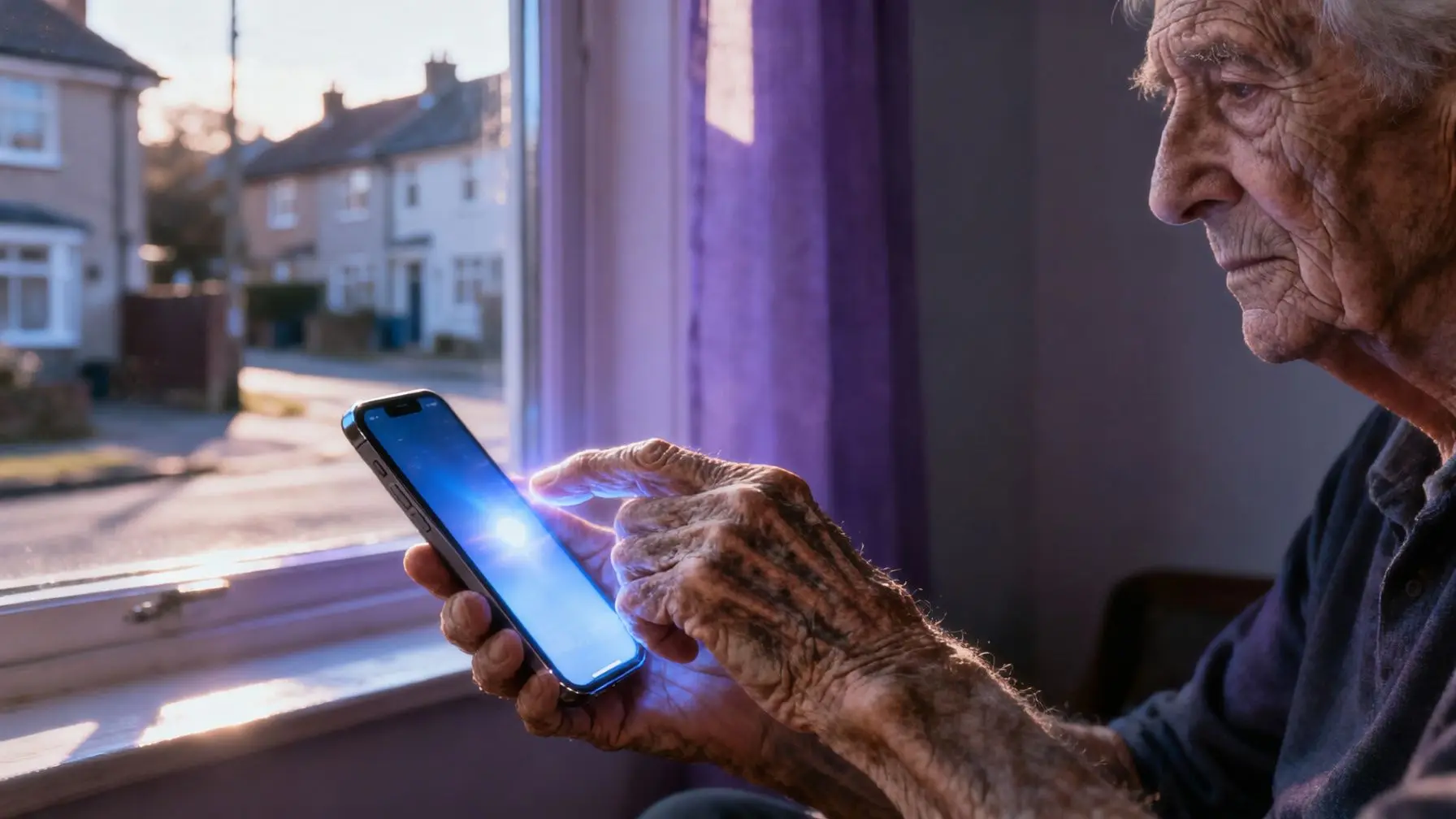
Isolation among elderly people affects millions of households in France, and robots or chatbot companions increasingly appear as a possible answer. Can an AI companion for isolated seniors truly fill a relational void, or is it simply a technological band-aid on a deeper social problem? This article reviews what research shows, real-world uses, and the limitations experts are pointing out.
Senior isolation: a public health challenge
In France, approximately one quarter of people over 75 report being in a state of relational isolation according to surveys by the Petits Frères des Pauvres. This phenomenon worsens with loss of autonomy, bereavement, or geographical distance from family members. Yet chronic loneliness is far more than mere discomfort: it is associated with increased risk of depression, cognitive decline, and premature mortality—effects documented for several years by gerontology researchers.
Faced with this reality, public authorities and technology companies are exploring various approaches: telecare services, home visits, and also connected objects capable of interaction. It is in this context that AI companions find their place.
How AI companions for seniors work
Social robots and voice chatbots
Two main categories of tools exist today. On one side, social robots like ElliQ or Paro—physical objects capable of dialogue, medication reminders, and activity suggestions. On the other, voice chatbots and mobile applications, lighter to deploy, enabling conversation by voice or text, sometimes with a visual avatar to make the exchange feel more personal.
These tools rely on language models capable of holding fluid conversations, remembering previously discussed topics, and adapting their tone. Some even offer regular voice calls, similar to a daily phone conversation. To understand the criteria that distinguish these solutions, this guide to choosing an AI provides useful benchmarks.
What scientific research shows
Research on the actual effectiveness of these devices remains limited in number and duration. A 2023 study of the ElliQ robot conducted with California seniors showed a reported reduction in loneliness feelings after several months of regular use. Other work, particularly on conversational chatbots, reports positive short-term effects on mood, but few studies follow users over multiple years.
Researchers remain cautious: sample sizes are often small, research protocols are heterogeneous, and novelty effects can bias initial results. It is still too early to speak of solid, generalizable scientific proof.
Observed benefits
Despite these reservations, certain benefits consistently appear in testimonials and field studies:
- A presence available at all hours, including at night, when loved ones are unreachable.
- A space to speak without fear of bothering others or being a burden to loved ones.
- Light cognitive stimulation through memory games or regular conversations.
- A structuring reminder throughout the day, which helps some people maintain routine.
These effects align with those described for a broader audience in this article on AI for talking when you feel lonely at night, which addresses loneliness beyond the senior population alone.
Identified limitations and risks
The risk of substituting human connection
The main concern raised by gerontologists and ethicists is the risk of substitution. If an AI companion becomes a senior’s sole conversation partner, it can inadvertently reduce efforts to maintain real human relationships with family, neighbors, or local associations. Yet no artificial conversation can replace physical contact, a person’s gaze, or a loved one’s presence during difficult moments.
Some professionals also worry about a perverse effect: these tools could serve as an excuse to reduce human visits, on the pretext that “the person has company.” This is as much a social as a technological risk.
Ethical concerns and personal data
AI companions collect sensitive information: daily habits, emotional state, sometimes health data. The question of confidentiality for these exchanges—often highly intimate—is particularly acute for a population sometimes less familiar with digital issues. This topic is detailed in this article on AI companions and personal data protection, essential reading before adopting this type of tool for an elderly loved one.
There is also the question of informed consent: does someone experiencing early cognitive difficulties truly understand what it means to entrust their daily life to an AI? Experts recommend systematically involving loved ones in choosing and configuring these tools.
A complement, not a replacement
The emerging consensus among researchers and on-the-ground organizations is clear: an AI companion can provide real support between visits, but it should never become a senior’s only social connection. The most promising uses are those where the tool fits into an existing network of family or community solidarity, without replacing it.
It is in this spirit that applications like noov.ai offer a vocal, multilingual companion with a customizable avatar, designed to provide reassuring presence between calls or visits, never to replace family or friends. If you want to understand concretely how a conversation with a 3D avatar works, this article on AI companion with 3D avatar details the experience. And to test for yourself what this type of tool can bring to your daily life, you can try noov.ai for free.
Ultimately, the question is not whether the AI companion “works,” but where we place it: a tool among others to soften lonely hours, never a substitute for human connection.
Frequently asked questions
Can an AI companion really reduce loneliness in seniors?
Initial studies show positive effects on loneliness feelings in the short and medium term, but research still lacks long-term perspective. Benefits exist, but remain partial and complementary to other forms of support.
Do these tools replace family visits?
No, and that's the main alert from experts. An AI companion works best as a complement to human connection, never as a substitute for regular visits, calls, or physical contact.
What are the risks related to personal data?
These AIs collect often intimate information about emotional state and daily habits. It is important to check the tool's privacy policy and involve loved ones in its setup.
How do you choose an AI companion suited to an elderly loved one?
Prioritize a simple interface, clear voice, and a tool transparent about data use. Support from a loved one during initial setup greatly facilitates adoption.